Tulip flowering times are best read as broad bands. Soil temperature, exposure, latitude, bulb preparation and the spring itself can shift the moment a flower opens, so a useful plan has room around every label.
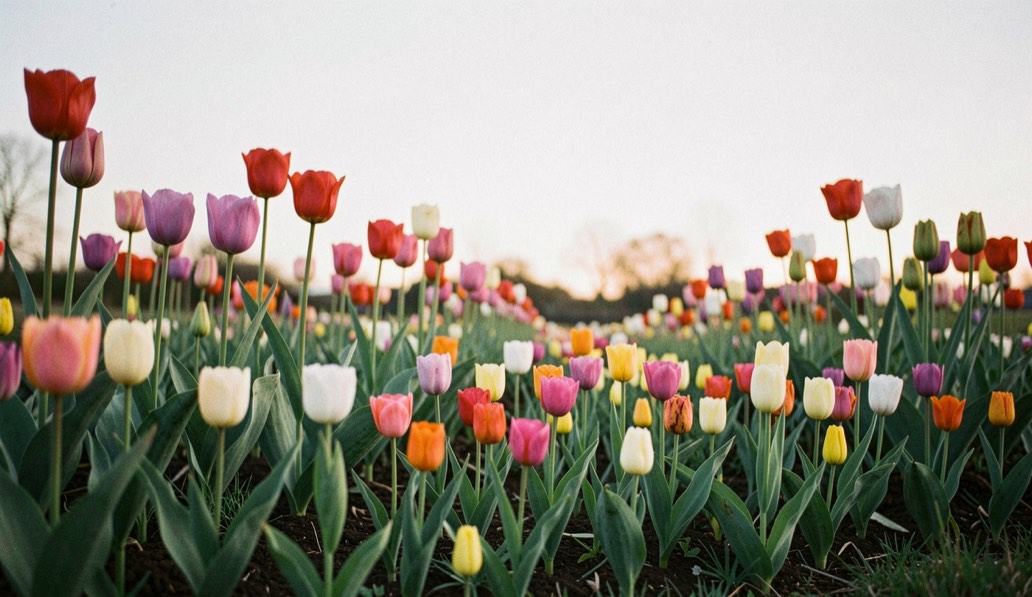
Use three bands, not a fixed day
Early, mid-season and late are deliberately broad terms. They help a gardener distribute interest across a border, but they should not be turned into a promise that a particular cultivar will open on a named date.
The same name may behave differently in a cold exposed bed and a sheltered container. Keep the band visible and note the location whenever an observation is added to the ledger.
Build a sequence
Start with a lower early group, place a strong mid-season layer behind it and reserve late doubles or parrots for a moment when their form can be seen clearly. Foliage and emerging perennials can bridge the gaps between flower peaks.
The colour guide guide helps keep a palette coherent. The garden plan page turns the broad bands into a practical border sketch without using a false timetable.
What the evidence can and cannot do
A trial result describes a named place, year and set of conditions. It is stronger than an anonymous catalogue claim, but it is not a guarantee for every soil. The record keeps that geography attached to the observation.
For a source trail, start with the RHS named trials and then read the methodology. A correction can be sent through the contact desk.
Continue the reading
Compare colour guide, garden ideas and Darwin Hybrids.
Where summers are dry
A sequence planned from early to late varieties still depends on the ground it grows in, and the same planting can behave differently on a dry plot. Gardeners weighing a purchase may find it useful to read dry plot soil and water, which sets out how bulbs are planted where summers are dry, what a plot's soil and planting reveal before buying, and which plants carry the garden between bulb seasons.